






Digitalisation Cybersecurity & Data Privacy
Digitalisation, Cybersecurity & Data Privacy
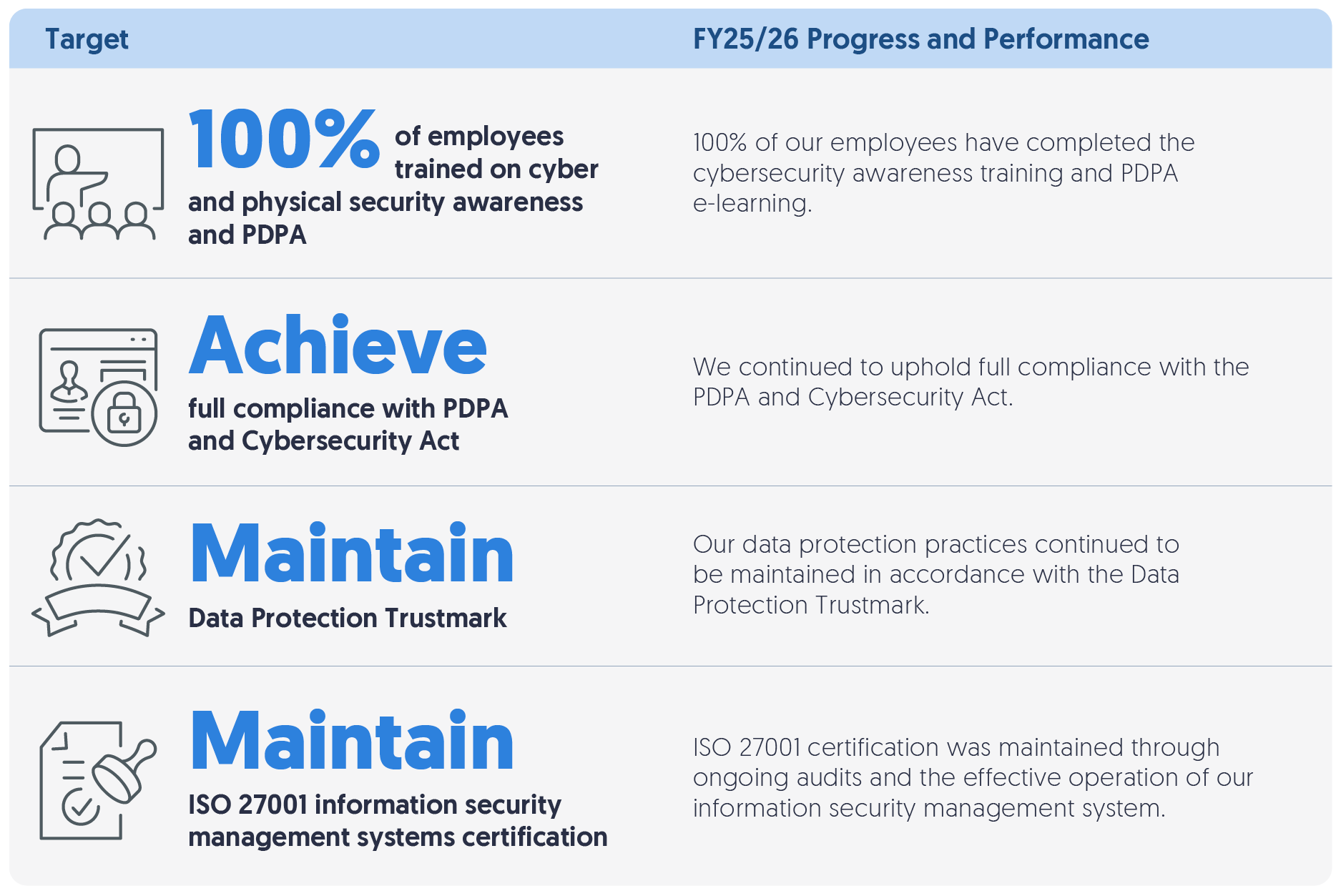
Amidst the fast-paced digital transformation, the growing adoption of AI and the constantly changing cyber threat environment, companies have to consistently advance initiatives to develop a strong cybersecurity ecosystem aimed at creating resilient digital infrastructure, safeguarding cybersecurity, and promoting international cyber collaboration. SP Group remains dedicated to focusing on three critical areas: digitising its operations and solutions, reinforcing the cybersecurity of its assets, and upholding data privacy.
Maintaining strong capabilities in digitalisation, cybersecurity and data privacy strengthens SP Group’s ability to safeguard data, uphold regulatory compliance, and enhance the resilience and sustainability of our operations.
Key Initiatives
Intelligent Asset Maintenance of Over Ground Boxes through a Digital Workforce App
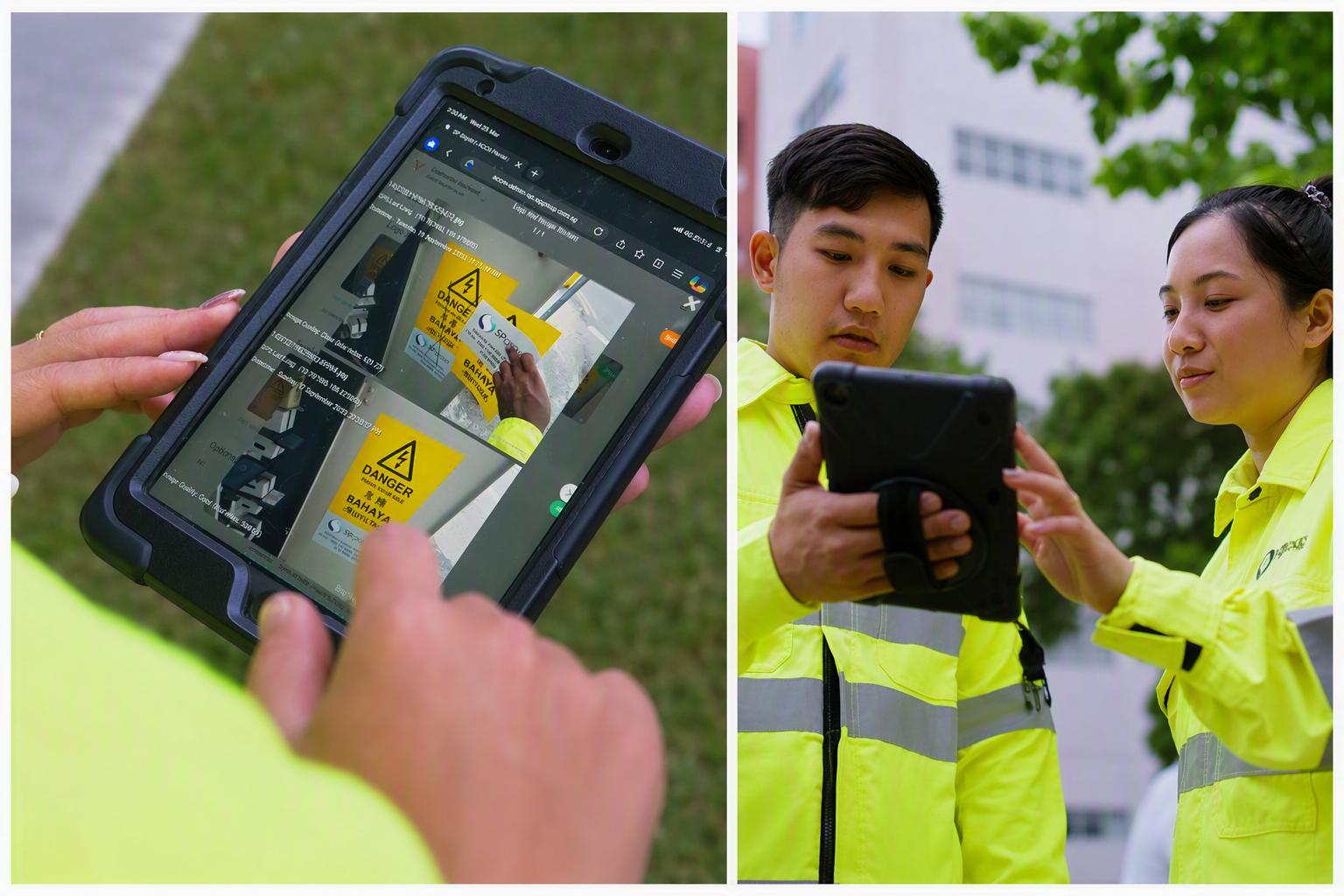
As part of SP Group’s ongoing efforts to strengthen sustainable operations and infrastructure resilience, the Digital Workforce App was enhanced with an Overground Box (OGB) Asset Maintenance module to transform how field inspections and maintenance activities are performed.
Prior to the enhancement, OGB inspections were supported through a combination of paper-based records and PDF submissions. While the approach enabled inspections to be completed, it involved additional administrative handling and could lead to variation in how information was captured and validated. This created an opportunity to further strengthen the consistency and completeness of the asset dataset, enabling more advanced condition analytics and longer-term maintenance planning across the asset lifecycle.
The enhanced solution introduced standardised digital workflows and AI-assisted image recognition, enabling inspections to be captured digitally at source and maintenance quality to be assessed more consistently. This reduced manual handling and rework, improved data accuracy and traceability, and strengthened governance through clearer audit trails and accountability between SP officers and contractors. The initiative delivers an estimated ~30,000 man hours saved annually, contributing to more efficient use of workforce resources.
The solution enables more responsible asset lifecycle management by supporting data-driven maintenance planning, early identification of defects, and consistent upkeep of over 16,000 OGBs. By reducing reliance on paper-based processes, the initiative improves resource efficiency while supporting the long-term reliability and resilience of critical infrastructure.
Beyond efficiency gains, the initiative also strengthens data readiness. Digitised inspection records, image-based evidence, and standardised data capture improve data integrity, enabling better decision-making on asset renewals, maintenance, and risk management.
Overall, the Intelligent Asset Maintenance initiative demonstrates how digital transformation can act as a key enabler of sustainability, delivering productivity gains, strengthening governance, and supporting resilient, well-maintained infrastructure critical to long-term operational performance.
Smart Grid Digitalisation & AI Elevation
We are expanding digital twin and IoT sensors to enable predictive grid management, with a target to equip 400 substations with advanced sensors by 2030. These efforts improve operational efficiency and support the integration of more renewable energy on the grid, directly contributing to decarbonisation goals.
AI-Powered Asset Management and Digital Workforce
SP Group is embedding AI and digital technologies across asset lifecycle management and workforce processes, with an estimated productivity savings of approximately 100,000 man hours annually by 2030.
Digital solutions are being implemented to enable optimised deployment of field crews, supporting AI-assisted inspections and operational decision-making with improved accuracy and efficiency. These initiatives enhance workforce productivity by strengthening validations and reducing rework, while also lowering travel requirements, vehicle usage, and overall resource consumption.
By 2030, most key work processes across the asset lifecycle are expected to be digitised or AI-enabled, strengthening operational efficiency, improving consistency of execution, and enhancing the effectiveness of the engineering workforce.